Episode 631
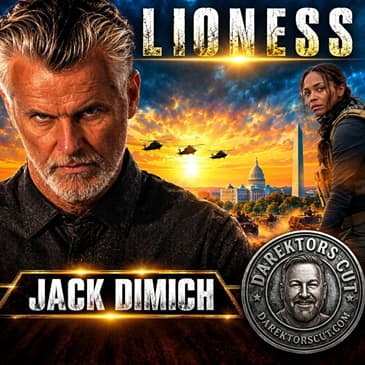
"Lioness"
Jack Dimich.
Jack and I talk about his role in Lioness, his unique path to acting and more!
Welcome, Jack Dimich
#lioness #zoesaldana #paramountplus #nicolekidman #morganfreeman #taylorsheridan #specialopslioness
Instagram: / mondaymorningcritic
Facebook: / darektorscut
TikTok: / mondaymorningcritic
darektorscut@gmail.com
darektorscut.com
[00:00:07] Alright, Jack, let me ask you, how many languages do you speak? Four. I'm fluent in four languages. Now, is that just the way your life worked out? Is it something that you went out of your way to achieve? Was it a family thing? How does that work, Jack? Well, since when I was a kid, my father suggested me to take another language. I was like 12 years old, and I started working on a second language, which was Russian. My native language is Serbo-Croatian.
[00:00:37] And then later on, after we had that civil war back home in Yugoslavia, I had to leave the country. I lived in Czech Republic, so I picked up Czech language. And then when I came to this great country of ours, I started working on my English. That's pretty amazing. And your path to acting is phenomenal.
[00:01:02] You know, Jack, I'm old, and I'm old enough to remember the Yugo. Do you remember the Yugo, Jack? The car that was a... Yugo 45. $4,999 was the price. Yeah, like, that's how I know I'm old, because some people who will be listening to this have no idea what we're saying, but I'll never forget that. It was like I used to see them on the road. It was just a... It was kind of a thing that you'll never forget. You know, it's a cultural thing. It's an automobile thing. Yes.
[00:01:32] Yes. Yeah. So, Jack, let me ask you, are there movies or actors, you know, as you get older that you find are kind of motivating you to become an actor? Because you definitely have, like I said, you have the training, you have all this other stuff going for you. What sparked that? Is it an actor, a movie, a play? Well, I grew up in a working class family during the communist regime in former Yugoslavia.
[00:02:00] My father was the only one who was working in the house. My mom was a housewife. So, I mean, housewife. And I had a sister who was older and we didn't have much financially, but we had that television. It was a big box, like not a flat screen like now. And we had only two channels because government controlled the channels, so you can only have two channels.
[00:02:29] But to make a long story short, I fell in love immediately when I was a kid. I think I was like 10 or 11, started watching movies, TV shows. And we were very fortunate that our country had a lot of movies from the U.S. and from the Western countries. And again, I was fortunate as a kid to watch these movies in the original language because Yugoslavia had a system with the subtitles.
[00:02:58] And that helped me a lot later on to understand this wonderful craft. But to answer your question, I grew up with my idols from childhood, like Al Pacino, Robert De Niro, Marlon Brando, Kirk Douglas, of course, Omar Sharif. I mean, Laurence Olivier. And then that's how I started.
[00:03:27] And then one day, my mom is entering my room and I'm having a speech in front of my mirror in my room, practicing Academy Award speech. I got the Academy Award. And my mom is coming in. She goes, what are you doing? I said, I'm having a speech. She goes, for what? Well, I just got an Academy Award for Best Actor, so I want to make sure. I want to thank these wonderful people. And it's a wonderful thing.
[00:03:56] She calls my father like, honey, I don't know if somebody was crazy in your family, but in my, nobody was crazy. But why? He's practicing Academy Award speech. I don't understand what was going on. That's how it started. Yeah. Jack, great story. Jack, I have to say, when you talk about the government deciding what you guys were to see on television, would the government ever edit some of the American movies that came over? Like, would they change the language?
[00:04:24] Or like, you know, maybe there's a movie like Red Dawn that they changed the, you know, how does that work, Jack? No. No. We were very fortunate. Yeah. I mean, for your audience and for you just to have more light on this story. We were between West and East. Yugoslavia was balancing between East and West. So we wasn't, we didn't have that harsh communism system. Tito was the president. He was everything, right?
[00:04:53] But he gave us a little freedom to watch what we want to watch on television, to listen to music that we want to listen to. So I grew up with Beatles, with Stones, with Doors, with all these wonderful music from Western civilization, although my country officially belonged to the eastern part of the world. But again, we were fortunate. And again, the best help that I had later on, I realized when I became an actor and when I studied acting,
[00:05:18] that the subtitles was the crucial thing because I meet a lot of guys from Eastern Bloc. They didn't have a subtitle. They had a simultaneous, and I mean, they were struggling with language big time later on in America when they came in. They kept that harsh accent. So I was lucky. Yeah. You know, I have to tell you, I keep the subtitles on. I just, it makes enjoying the movie so much more because sometimes words will pass or,
[00:05:48] an actor, when he's talking or she's talking, you can't hear it. I love subtitles. I'm a big subtitles guy, so I get it. Movies should be in the original language. My favorite thing was I was in a Berlin Film Festival with the movie In the Name of the Sun. That was my first leading role in 2009. And I'm in my hotel room, and I'm watching The Godfather, and Al Pacino is coming in and says, Guten Abend.
[00:06:15] You know, Jack, I'm going to get into Linus, and I have to say, you mentioned Pacino. You mentioned De Niro. We're going to get into that scene at the end that I really loved with you and Zoe. But I have to say, I don't know. You've seen the movie Heat, right? Yeah, of course. Yeah, so that's all I kept thinking about when I was watching that scene with your character, Alexei and Joe, because they are so nice to each other.
[00:06:42] But after they're having their drink, you look at her and you say, listen, you come to Ukraine again. I'll kill you. And that's kind of the coffee shop scene that they have in Heat where, listen, you get in my way. I'm going to take you down, brother. So I was just thinking when you were talking about De Niro, Pacino, I was kind of relating it to that great scene in Linus in the last episode. A lot of people called me after that wondering and asking the same question. I said, guys, I didn't write the material.
[00:07:12] Phenomenal. Taylor Sheridan wrote that, and it's a wonderful scene. But to answer your question, me as an actor, I was just working on my character. Like, I never watched the Heat or anything close to that thing. Because I was fortunate that I got the job to play Alexei Urimov. I had a nice couple of months to really, really sit down and what my teacher, Michael Magada, used to say to him,
[00:07:40] and talk to my character every day to see who he is. Because let me tell you, Alexei Urimov is opposite, completely opposite what I am. He's from a different world than I am. And I don't support anything that he does. So for me, as a method actor and a character actor, there was a challenge. And I'm very grateful to Taylor Sheridan, who created this wonderful show, I mean, TV series.
[00:08:10] And, of course, I'm grateful for my character. Yeah. So let me ask you, what is Alexei? Is he... How would you describe him? What's his role? I mean, I saw the series, but, like, what's his official title? What would you say that... How would you describe him? What would you say he is? Two words. Putin's hammer. That's what they say. Yeah. Yeah. He works for him directly. He takes orders from him. He's ruthless, of course.
[00:08:36] I mean, they taught me, at least, Ross, but if the character is fiction, you have to come up with a biography for him. And so I have, like, 20 pages that I wrote about Alexei Urimov. Wow. How he grew up, how he lived. I even have the names for his parents. For his brother who died in Ukraine.
[00:09:04] And, I mean, I don't want to go too long. I don't like to talk about my process, but to answer your question, I really spent time with Alexei Urimov. But, again, I have to be honest, and I don't want to be too modest, but when you have a great material, this...
[00:09:21] I mean, when I saw this on page, I mean, what Dan Grimaldi, my other teacher from Strauss, used to say, it's half a job is done. Because you just have to develop and deliver. And that's it. I wasn't ready for that scene because your character is kidnapped. He's treated poorly.
[00:09:52] But yet, when he's having this conversation with Joe, he's almost, like, making her feel better. Like, don't worry about it. You're a soldier. I get it. And you know what? He's talking about how to treat the people from Iran and the spies there and look into this other person. It's just... The way he could have reacted and the way he did react was just great to see. Like, he's just... You know, it's not personal. It's just business. I love that rapport between you two, Jack.
[00:10:21] Well, it's an age of his business, if I may say. Let's not forget Zoe's character and my character being in the same line of business. Just from the opposite time. I did my research a lot on KGB, on all these secret services from the former Soviet Union and Russia. I speak the language. So, I read some original material, which, with all the respect to English and other languages that I speak,
[00:10:50] it's way different when you read an original language. Because there is no alternating. Nobody alternates anything. It's the way it is. And my choice is... I had so many choices for Lexi. But my choice was, particularly in that scene, to play completely the opposite. So, whatever happens to him, I try to put in a good way.
[00:11:16] And telling my character while I was doing it, it's okay, you're home free, but she's not. So, I play that kind of way that I'm more concerned about her than myself. Yeah. Because, like you said, nobody kidnapped me. Yeah. Yeah. But she was kidnapped. I mean, so, that's... Like you said, that's not war. Kidnapping. That's really bad.
[00:11:45] Jack, what's it like acting opposite Zoe? What's she like? What did you notice? Just talk about the stuff that maybe we didn't get to see on screen. I know who I'm going to be working with. And it's not enough to say that I have tremendous respect for Zoë Saldana, which she spoke to me in person. I mean, her craft, her dedication.
[00:12:14] She was very truthful. I mean, I was fortunate to have wonderful teachers, at least Roswell, for four years, who taught me that when the actor opposite you is truthful, when he tells you the truth, that's much easier to work on your character because you believe the person across that table in that case. I mean, we did many takes for that scene from different angles, different cameras, of course, because Taylor Sheridan, his perfectionist, he directed that scene.
[00:12:43] And it was... I mean, I enjoyed it so much. I mean, I don't remember how many hours we worked on that, but for me, it was like... I felt like it was 15 minutes, how much I enjoyed that. But to answer your question, Joyce Zobana is so rich from the inside. And just when you look at that scene next time, just look at her eyes. Because how I learned this craft... I mean, with all due respect,
[00:13:12] the instrument, face, hair, hands, movements, eyes, they never lie. When an actor tells the truth, when he's in character's shoes, eyes tell you everything. And that fed me so much, that helped me so much to be relaxed as Jack Dimitri, as an actor, but be very, very, very precise with Alexei Urimov, who's, let's not forget, opposite from Academy Award,
[00:13:42] Brink and Zoe Zobana. So... Yeah. And as a human being, in the end, I mean, the way she treated me as a fellow actor, I really have no words in any language that I speak to describe. Humanity. Which, I mean, for me, that means a lot to me as an actor. That's a wind in my back that pushes me even more forward. Yeah, that's a great answer. So what was it like with Taylor on set?
[00:14:12] Is he... What's he like? Is he hands-on? Does he let you kind of... Is he strict with what's on the script? Does he let you, you know, kind of ad-lib a little bit? Like, how is Taylor, as a director, you know, working with him, the stuff, again, that we don't see on screen? I gotta be honest with you. I mean, I was expecting, like, I don't know what, but, I mean, so simple, so easy to work with. Jack, I want this, I want that, you know, the situation, you know, who you are. I mean,
[00:14:42] let's shoot. That was it. And then, I mean, of course, because there are different takes, and only director knows what he wants in the end, and what I've noticed with him, he wants every possible option you can give him, which, I mean, for me, that's a privilege for an actor when director, I'm not gonna use the word pushes you in that direction, but gives you freedom to go in the direction
[00:15:11] that you can play in character's shoes the way you feel at that moment, and to be present in that moment, that's the privilege that me as an actor, I mean, I'm, again, I cannot be grateful enough for that, and that's how I felt while I was working. There was no tension whatsoever, although, I mean, you saw the scene, it's a very difficult scene, because, I can hear the breathing over there,
[00:15:40] how close that scene was, so. It's a great scene, too, Jack, it's just so, it's just so, there's something really special about it that you can't, you know, put into words, it's just, it was one of my favorite scenes from that entire season, you know, but like, Taylor's stuff keeps you guessing as a fan so much, like, there's a, in that same scene, your character goes to get her a drink, and I'm thinking to myself, is he gonna poison it, is he gonna try to get her, like, you don't, with Taylor, you don't know,
[00:16:10] because you think you know the way things are going, and then it's, start right, you know, it's like, so I, I thought your character was gonna try to poison her, or like, but when you finally realize that he's just, you know, the way he speaks with her is very respectful, it's just, you kind of enjoy it a little more, anything you wanted to say to that, Jack? That's inviting, that, that was on the page, and again, I gotta go back, at the beginning, what I said to you, Darren, that, when you have that material, I mean, it's,
[00:16:39] it's a luxury for an actor, when you have that, and I remember when I read that scene for the first time, I mean, don't take me wrong, but, but I, I couldn't sleep that night, because, it, it opened so much for me, when I read it first time, I said, oh my God, I don't know where to start, when, I mean, so many options I had in my head, and I was, to be honest with you, I was ready, before I came to the set, I was ready, for what,
[00:17:09] whatever director will hit me with, to be ready to, because, Alexi Urimov, is a very complex, I mean, he might look simple, but he's very complex, from the inside, a lot of things happen, to this guy, and, we could, we could expect anything, from him at that table, and, he, I believe, he choose to be a gentleman. Yeah, that's a great answer, so I have a few questions left, Jack, let me ask you this, Jack, what is something in your career, as an actor,
[00:17:40] that you can never really, know about, until you experience it, or live it, like what is something you found, on your journey of acting, where, people would only know it, if in your case, you lived it, like in other words, people could tell you, be careful of this, this is great, this is not, but like what have you learned, that, only experience, could teach you? That's, I mean, that's a great question, and I'll try to, I'll try to answer,
[00:18:10] in a short way, when I came, to this great country, 30 years ago, I came with $26, in my pocket, and my English words, train, train, tomorrow, that is this thing, I'm a refugee, from Bosnia, I was, for two and a half years, I didn't have status, so I had to wait, for the government, to decide, because I asked, for political asylum,
[00:18:39] because my country, was in civil war, and I didn't want, to be part of that, anyway, to make a long story short, after two and a half years, I got the papers, I got the green card, and documents necessary, to enroll myself, in Lee Strasberg Institute, and going back home, three times, I was denied, in the Academy, of Dramatic Cards, in Belgrade, it was the capital, of Yugoslavia then, I was lucky, three times, I tried, they never, accepted me, to be even,
[00:19:09] a student, 1997, September 12th, nine o'clock in the morning, I'm in, having a first class, acting class, with Michael Magada, gentleman, who accepted me, in his class, and I spent, four beautiful years, of my life, studying this wonderful craft, but, I had to, work in the restaurant, every night, from five o'clock, till two o'clock, in the morning, then tomorrow, Strasberg, from nine, to four p.m., every day,
[00:19:39] except Sunday, for classes, for exercises, for working, on my instrument, and this is the only instrument, I have, so, I'm still answering your question, that experience, of course, I use, yeah, not to mention, that so many jobs, I had to do, to survive, to pay my bills, to pay the school, to pay the academy, at least Strasberg, wasn't cheap, at the time, I don't think it's cheap, even now, so, but, I gotta say, with all due respect, to me as an actor,
[00:20:08] or a human being, if it wasn't for my wonderful teachers, I'm gonna name them now, Dan Rimaldi, Michael Magata, Irma Sandri, Lola Cohen, wonderful people, who, took me, and guided me, for four years, tell me, every detail, that I had to do, with myself, as an actor, to develop myself, as a person, and as an actor, in order to be, a working actor someday,
[00:20:38] which I am right now, that's at least, half, for what I've done, and I'm so grateful, with them, yeah, that's an awesome answer, Jack, you legitimately, are the American dream, like you are, the American dream, outside of being, a great actor, you are also, the American dream, so that's awesome, Jack, what's around the corner for you, what are the projects, you got coming out, any social media stuff, you want to throw out there, whatever, whatever you want to get off your chest, and say, right now,
[00:21:07] I'm in Cincinnati, I just, I'm sorry, I'm in Lexington, Kentucky, I flew in Cincinnati, this morning, and they picked me up, because I'm doing a TV show here, I'm sorry, I signed the NDA, I cannot say, the name of the show, a production company, but it's a major production company, it's a big distributor, I'm guest starring, in four episodes, okay, I'll say the first name, of my character, his name is Victor, okay, that I can say, and I'm going to be here, for two weeks,
[00:21:37] and when I finish there, I'm going back to New York, in the meantime, of course, I'm auditioning, I have a wonderful manager, Josh Brown, who's very, very supportive, who's trying to get me, every possible audition, that I deserve, also, I cannot forget to mention, my wonderful agent, from Hard and Curtis Agency, Michael, David as well, so, I'm working, on daily basis, as an actor,
[00:22:06] and I had that approach, that Michael Magata, my wonderful teacher, who accepted me, in his class, taught me that, every day, of an actor, is the first, and last thing, in his life, he has to approach, every day, like he never, had a role in his life, and the one he's doing now, is the last one, that's the only way, I'm going to quote him, stay hungry, till the day you die, that, that's a great move, he meant in a good way, because he says,
[00:22:36] there are a lot of dangers, in this business, when actor, takes off with his career, when he, what we like to say in English, becomes somebody, that could be a downhill, after that, that I, I worked hard, for my career, I'm still working, and I hope, I will never stop working, and I will, hope, and, till the day I die, that, that, I will keep, what I was taught, the Strasburg, that means, work every day, on yourself, and on your craft,
[00:23:06] and then, you get nothing to worry about. Jack, you're terrific, great actor, and I really thank you, for this time, you couldn't have been more nice, and the future certainly, I mean, it sounds like, you got a lot of, you know, balls in the air, and that's great, you know, that's awesome, and you know, I wish you nothing but success, moving forward. Thank you so much, and thank you for inviting me, to your show.