Episode 626
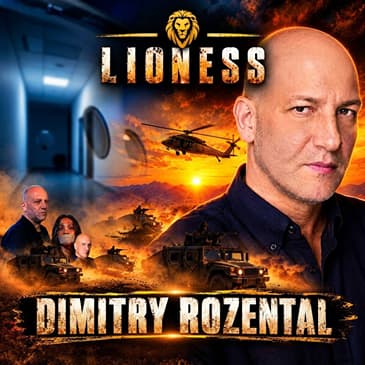
Dimitry Rozental
"Lioness"
Dimitry joins me to talk about Lioness, his character Renat, his journey on the show both and and off camera and so much more.
Welcome,
Dimitry Rozental
#lioness #lionessspecialops #morganfreeman #zoesaldana #nicolekidman #taylorsheridan #spy #cia #fbi
Instagram: https://www.instagram.com/mondaymorningcritic/
Facebook: https://www.facebook.com/darektorscut
TikTok: https://www.tiktok.com/@mondaymorningcritic
darektorscut@gmail.com
darektorscut.com
[00:00:07] Then I came to Los Angeles. Officially, I came here 14 years ago and just stayed. That's pretty much so. Yeah, I'm Russian-speaking from Ukraine, even though Russian is probably my first language. Definitely.
[00:00:26] Yeah, yeah. It's funny that you talk about what you're speaking because I was listening to Joe Rogan today and Yakov Smirnoff is a famous Ukrainian comedian. And he was talking about Ukrainians that speak Russian, Russians that speak Ukrainian. He was talking about who gets offended. He was just going into the whole breakdown. It was so interesting to hear him talking about that. So as a kid in the Ukraine, are you introduced to movies? Are you introduced to like actors and shows, any of that stuff?
[00:00:54] My mom primarily thought that my performance capabilities at preschool were so impressive that she put me in an acting studio when I was, I think, seven years old. And yeah, that was pretty much it. I don't think I had much of a choice in that. I just remember that this is how life was from the very early age.
[00:01:19] And in high school, last two years of my high school in Odessa in Ukraine, I went to a special after hours theatrical high school. So for most kids, the classes would end at two. And for me, they would end at nine sometimes if we were preparing a show or performance or something like this.
[00:01:41] So that's how I graduated high school. And yeah, I didn't have much of a choice in that, but I enjoyed it. It was immediately something where I felt very comfortable. I was on big stages when, and it doesn't sound like bragging. It's just, I fell into that last few years of Soviet Union where big performances with big orchestras and army music and greeting the veterans.
[00:02:05] And it was late 80s, beginning of the 90s. And so I got to MC a lot of those from the stage because they thought that the red, you know, scarf and me, you know, saying important things in the microphone was fascinating. Yeah. So I had that experience last years of Soviet Union and I managed to like, you know, really, really feel it. Yeah, yeah, yeah. You know, it's my last guest. It was also Ukrainian. Elizaveta Neretin, who was awesome.
[00:02:36] Awesome. I just finished the show yesterday. Yeah. Yeah. She was fantastic. I enjoyed her performance a lot. And I thought it was a very complex role because it's very is complex and her part in the story. And I think she managed it amazingly. Yeah. Yeah. I emailed her. I won't say what she said in reply because I'm very protective of my guests. But I will say that from my point of view, they built her up and she was so terrific.
[00:03:05] In the last episode, I felt like Dimitri, they just like threw her away like she didn't matter. And maybe that's very similar to what happens in the spy life in real life. But I just felt like they threw this great character away. You know, you find her in like that basin or wherever she was in. It's just so heartbreaking to see the way that unfold. I don't know. Maybe I'm just being an overzealous fan.
[00:03:28] Or maybe that is exactly the point of that turn of events is that we get to experience the sadness, you know, and that brings everything to sort of a sense of reality from perspective of these people in their life. And feeling that for the character, I accepted that as a fact of the truth of the story.
[00:03:54] And, you know, more respect to creators for sacrificing a character like this to really get the viewer to be a part of this with all the array of feelings that it brings. Yeah, and I got to be honest with the episode. Go ahead. I'm sorry, Dimitry Rozental. Not so much about Renat, though. Yeah. So, yeah, I have to say when it comes to Renat, what went into developing him? Because, listen, you made the most of your screen time.
[00:04:22] You are supposed to be and you are completely hateable in this character. But that's what you're supposed to do. Yeah, I mean, he's a guy that does things for money. But that's a good thing. Like, that's what you want, right? You want the viewer to not like your character. That's a fair statement, right? Yes. I mean, once now this is done and this is a reaction, yes, I'm thankful.
[00:04:45] But, yeah, I definitely just wanted him to be true, you know, and in sort of his... How do I formulate that? I didn't want to be hated. I wanted... What's the good way to put it? Feared? Is that a way?
[00:05:14] I'm thinking about it. I'm thinking about it. Okay, okay, all right. Okay. I wanted Renat to be... I wanted Renat to be in the story. You know, that he's not bringing any feelings before...
[00:05:39] Just wanted the audience to understand that his function in the story is this. And I wanted to do the best possible... I don't really know how to answer this question, to be honest. No, so let me rephrase it. Maybe it's my fault for not being... For not phrasing it properly. So, I guess when I say hateable, it's like, well, he's torturing Joe for much of the episode. So, you see what he's capable of. Like, he's a very fearsome guy.
[00:06:09] And let me be very clear, Dimitri. You were great. You made the most of your screen time. You were terrific in maximizing who Renat is. So, it's like, all these villains or people that are the bad guys, all these quote-unquote bad guys or bad girls, whomever, they're the ones who make the heroes kind of shine a little brighter. Because, I mean, listen, we have some great actors in this show. But I guess mission accomplished when it came to your character. I feel like you played it perfectly. That's what I think. I think he was perfectly written.
[00:06:38] I think Renat is in the words. When I saw the first scene, you know, before the audition, I understood immediately who this person is. And what came from the page was the professionalism. And that was the goal for me while the character was developing with the script, is that Renat is professional. And if anything, all the events that are happening around him is actually an obstacle.
[00:07:08] Her fighting like this is an obstacle for Renat. I never wanted to hurt Joe. This is not the point. The point is if she would have given me what I need immediately, we could have just sat there and quietly go on with our days. My job is to get her and to deliver her. The goal was never to hurt her. And everything else is more an inconvenience to her and me. Yeah.
[00:07:35] And that's why I never wanted Renat to be feared or I never wanted him to sort of beforehand create any emotions in the audience. I just wanted him to be true to the goal. And the goal is to deliver Joe. It's very simple. I just need her to be where she needs to be. And all the violence can be avoided.
[00:07:57] That's why I think Bobbot's appearance was so shocking to me because it was a completely different approach from what I was hired for and what I was shopping for. And the fact that audience feared me was more pleasant to me as an actor. And it was like, okay, great.
[00:08:16] But being real on screen in terms of like being right about just getting to the goal with Joe was like more important for me as I was going through the story. Gotcha. Let me ask you this, Dimitri. So he's like a mercenary, right? Because he's not doing it for his country. He's doing it for the money, correct? That's kind of who he is. Is that a fair statement? Yes. But I think there is still part of ideology left.
[00:08:47] I think Rinat still has ideological beliefs and keeps them maybe even to himself. Right. I think that's... Rinat enjoys conversation with Joe in the water scene because Rinat gets to say what he really means. You know, but money is still the king, you know? Yeah.
[00:09:08] But the king is professionalism more than anything because I'm not here to gloat at her misfortunes. You know, if anything, I'm okay with having a little conversation and opening up as a person to her. But I think there is some ideology a little bit left as to who I'm working for. And I think maybe there is even some code. Yeah.
[00:09:38] No, no, that's a great answer. But let me ask you this, right? So the show makes it a point to say anybody who takes this bounty is crazy because this is a crazy mission. Like, this has got, you know, terrible written all over it. But somehow Rinat says, you know what? I'll take it. Like, right? Is that kind of how things unfold, in your opinion? Like, that says something about how fearless he is, I guess? Is that fair? It's definitely not Rinat's first rodeo. He definitely did this before.
[00:10:07] And being a professional assessing his capabilities, I read off the page that none of this is an issue. And the script, the way I felt it, and you need to understand that I did not have the end of the show in the beginning. So all I could see is that how the character is developing in front of me and how I live through the character's life, I understood that it's not even so much a risk take. If there is a proper price, I respect.
[00:10:37] I did not respect himself enough to say, I can do this. I'm a professional. You know, maybe I toyed with the idea. I didn't want to create any backstory above what was already given to me or written on the page, you know, because I didn't want to add any fantasy to this character. But I believe that it's an educated person, person who knows history, person who knows, you know, politics, maybe, maybe an official who wants to live this kind of life right now
[00:11:07] or maybe a professional agent. But in any way, it wasn't so much the danger, it was the price and how capable I am to do this even. Yeah, no, no, great answer. What does he think of, what does, we're not think of Joe, you think? I mean, outside of the, what do you think he has respect for her? How does he view her? Um, we are soldiers in the battlefield and, um,
[00:11:38] and I respect the soldier in her, I think, because the first moment of struggle, um, as I was not involved in it, and I thought that was, uh, like a giving moment in the script too, that I wait for her to make a decision not to do this. Because I already know that she's high ranking enough, means intellectual enough, means it's a person, you know, that can be transactional and be okay with that
[00:12:06] until we can separate. You know, I was, I hoped for a better development of our relationship, I think. And I think it goes through the story. You know, she continues hurting herself. You know, she's, she's not, you know, not keeping herself comfortable. Yeah. And, uh, and that's because I think I view her as a, not as an equal, of course, because there gotta be definitely an ego in it, not enough to take this job, but definitely as an equal adversary who,
[00:12:36] in given circumstances, again, we could have just sat on separate sides of the room, you know, then quietly, you know, without doing this, especially if I took out, the, um, you know, the, the tracker. But I think as a relationship, I can't call it a relationship because as we know, it's just, you know, it's a matter of six, seven days. Uh, but I think, but I think there is a, some level of respect. It gotta be
[00:13:05] because of how she fights, because of what she says, because she's not begging, because she's not asking for anything except her clothes, which means that all she asks for is decency and respect in the circumstances. And I think as we continue talking and she's brave, maybe even the words she says, uh, against Putin affects it in not because it is not,
[00:13:30] does not hear so much criticism over the leader and her saying that out loud maybe makes him not change his opinion. Oh God, no, but at least be like, okay, she's, um, she's educated, which is, you know, very impressive for not given this American, but she knows our history and she can, you know, she can argue. And then as we continue the story, you know,
[00:13:57] I think quiet time on the plane or whatever happens on the plane gives even more respect to the fact that there's almost no violence after that. You know, I just need to pass her on. I need her to be safe, you know, because that's, it's also my job. And, uh, and that's it. And that's how I, I view her as a professional. And then when Babad shows up, you know, my understanding of this, uh, universe where we exist, I think falls through. And I understand that this is not,
[00:14:25] this is not the job that I was signed for. This is not what I, I, you know, and I tell it to him, you know, I don't care about your way. You know, I thought we're all professionals here, but apparently it's a surprise. It's a surprise to it or not. And it's, and that's, and that moment, and that moment told me again from the script and how the script came to me, you know,
[00:14:53] through the words is that I knew something broke in the future that I was building for myself after this story and getting paid a quarter million dollars or whoever was the shopping price on these characters, uh, on, on her head. You know, I, I understood that this is something where we shouldn't been going and this, and, uh, and, and this moment will cost me, you know, and I think that disappointment was there, um, in the pages when I read it.
[00:15:22] And at that moment, also awesome, uh, comments there. Um, let, let me ask you this two things. One, a quarter million seems kind of light for that job. I feel like I was expecting like five or six times that because of the danger involved. I had no knowledge of money. Um, you know, there's nothing that ever that's, you know, I never wanted to think about it in monetary ways just as a fair compensation. So, you know, maybe, you know,
[00:15:51] that's not an actual amount that I think of. I never thought about it. I just kind of think about it now, you know, but, um, I don't think he not live such a leg luxurious life. I don't think, I don't think he not would, you know, care about the amounts this much. I think maybe it's challenge. I think it may be, is ideology mixed with opportunity and being properly, uh, uh, compensated. Um, that, that's all.
[00:16:19] I don't think it's so complex for you not as how much money exactly we're talking about. Right. No, I think it's, I think it's almost, uh, uh, you know, it's a fair play for this spy. Yeah. You know, it's a fair challenge. Maybe not has some guilty pleasures, but I never dwell in that. Um, you know, I try to only live in thoughts of character in the, I try to live in the thoughts of the character on the day when I am already,
[00:16:48] when I'm already there. Yeah. That along with, I know you said earlier that you don't give a background to him, but what does this personal life look like? If you had to guess now that you're looking in the rear view mirror, what do you think his personal life? Cause I, that whole field, no matter what side you on, it's like, you're looking over your shoulder. You're, I mean, your character is perfect example of that. Like he's sneaking out to the car. He just, we're not just wants to get out of the country and get home safe. So what does his personal life look like? You think, Dimitri, if you had to guess, looking back,
[00:17:18] um, whatever personal stuff that I get from the character, I try to get it from the page. I try not to invent it beyond what's already there because, because I want the words that are there. I want the imagination in this case of Mr. Sheridan, you know, to be the only speaking voice and, and I will continue reading and I will continue looking at the script, you know, as Anthony Hopkins said, you know,
[00:17:48] a few times, um, until, until I will find that in me, if it will be reflected from my own life, you know, and will be methodically knocking into my brain, I will use it. But if nothing personal comes, then I will let the moment that I exist in, in this particular moment in time written for me by the author to dictate everything that I need to know, 40 not. That's it. Everything else, I believe is extra.
[00:18:15] If the line will eventually bring some kind of emotion, then I will welcome it. I will discover it. I will try to think about it, but I try not to, you know, in this particular role, not to replace faces or replace feelings or create alternative universe where this will remind me of something else. I just, you know, I try to live in that moment. And, uh,
[00:18:42] sometimes I think of it not in where he is geographically, where was he at certain points? What would his reaction be? But, um, but I always try to bring it to myself sort of. Yeah. Um, and, and try in this case, if I don't know exactly, I try to be abstract. Then the abstract idea beyond a very bright sort of HD, super K eight, you know, moment that I am in,
[00:19:10] this is all bright and everything else like a video game, you know, is what I've done exist before I got here. And I don't really exist after I got here. I do, but I'm not there right now. I'm here. And so I try to dictate this moment. Uh, I will think of like, yeah, I probably have a family. Am I going to think about the family at this particular moment with Joe? Probably not. So I do have it. There is an overall goal to go back home,
[00:19:39] but I will not tell anybody. I did not would put it really, really back, back dark in some kind of corner of his psyche and not think about it at that moment. And so Dimitri doesn't, you know, I don't want to talk about me in third person. I don't think about it in that moment. I was in these thoughts. Maybe, maybe I missed the person. It's all just real before I go into that, you know, hyper real moment with Joe. And we talk about things that are in that moment in our minds, or at least in mine.
[00:20:09] And then when I will leave, I will have a freedom to think about my family and how much I want to get back home until I will have a chance again in this HD moment to say to Dimitri, I need to get home. And then he didn't say yes. He just said, he's thinking about it. Well, now you know what happens to people who don't say yesterday night. Yeah. I'm just kidding. I don't know. I'm sorry if I'm going too,
[00:20:39] too deep into this conversation, but, you know, actors always want to talk about their character. And I'm glad you are. Yeah. Yeah. You're doing great. Absolutely. No. And, but I have to say though, even though there's no backstory there, we see it as a little bit of a human being in a couple scenes. One of which is, I just can't help but think, you know, he's watching Joe and you hinted at this earlier. You said, you know, he's watching her not give in. She's not begging. She's not pleading. She's just tough as hell.
[00:21:08] She's not even giving in. I have to believe no matter who or not is on the inside or out that he's pretty impressed with how tough Joe is and how resilient she is. I think also immediately. I think, I think the disappointment that I have to hit her right off the bat, you know, is, is really affected me when I read it. I was like thinking to myself, there's no immediate need in this violence, you know, but also first and foremost,
[00:21:37] we need to establish the fact that I will be the boss for the next, you know, amount of days. And she needs to know, you know, and I understand that I have to do this. And then it's very non-personal. And I think partially it's because it's professional and partially because I'm still hoping we just make it very transactional without any hurt,
[00:22:05] without any unnecessary violence, because she's a high value target. As a businessman, I probably understand the difference between a low paying client and a high paying client. And the high paying client needs to be delivered in certain condition. And I think I got that message versus Babat, who doesn't get that message. And, and I think that is the respect that, that immediately there, you know, it's in the lines,
[00:22:36] you know, I tell her consistently through the first scene that I know everything already. We're not competing here. We're not measuring anything. We're just having a conversation. Tell me where it is. I will leave you alone. If you don't tell me where it is, I'm going to keep looking. It's what I'm paid for. You know how it goes. Why are we doing this? Yeah. Yeah. Because if you want to be super hypothetical, she has a family and maybe I have someone or some, something that I want to get back home to. Right. And her,
[00:23:06] and you know, we might both be better, but of course that's not how it is. Her resistance is obviously her survival. And my being adamant is obviously my survival. Yeah. In the grand scheme of things, but the respect is definitely there. And, uh, um, she's physically stoic. She's a professional, you know, she does everything to go back home.
[00:23:36] And, I think the respect is there. Till the very, till the very last moment. Yeah, that's a great answer. And I also wanted to add though, I, I think that she's in the show makes it a point of showing a viewer this. She's been in the field too long. Like she's needs to stop. She is either burnt out or she, she's seen too much. She's been through too much. And I think what happens with or not, and Babat, everybody, I, I think that's the last straw. I think, I mean, it costs her,
[00:24:04] her family that we see towards this season. I, I just think she does as she said it. And others have said it in the show. She needs a desk job because she cannot handle this anymore. And no human being could, I think, but I think we're not somehow perseveres through this. He, he can handle it. She is done with it. I not, she wouldn't admit that, but from the outside looking in, she seems to be, it's, it's, it's enough. I think, what do you think about that, Dimitri?
[00:24:32] Maybe you're not and Joe meta two different parts of their career. No, that's a good point. That's a good point. You know, almost like she's at the exit. And I think we're not, isn't his bloom. Ah, yeah. May they not be in this moment, you know, not having a cushy political, semi, uh, a power job back at home. You know, he's obviously not intellectually inferior.
[00:24:59] So he probably could have just stayed home and do whatever he could do at this level. This is obviously a general, this is a, this is a big level of operative capable. Usually spies on this level get a pretty, pretty substantial, um, um, levels in government. So he's doing this. And if we're not, he's doing this, it's because he either likes us or his life made him be in this circumstance financially, even. Yeah. Despite,
[00:25:29] despite his school, he is here because he either likes it or he needs it. And she is in this situation because neither nor for her. And I think these are different, different energies. You know, even it is very calm about this. Obviously he's in superior position, but he's also very comfortable with this level of stress or he accepted this level of stress. And she already did not want to have that as a,
[00:25:59] as she was very vulnerable, um, in the very vulnerable situation. Yeah. What was your, Oh, go ahead. I'm sorry. Go ahead, Dimitri. No, no, no, please go ahead. Um, what was your rapport like with Zoe off kit when the lights, um, and can't, not lights when the camera went off, what was your rapport like with Zoe? What did you guys talk about? I mean, obviously if it's something personal, you don't have to share that, but like professionally, what did you guys talk about anything like insight? insight? How's that work? Our first experience was very intense.
[00:26:28] It was a very long day. And, uh, because yeah, the episode, uh, two, it was a very long day. It was, um, an appropriate amount of emotions and appropriate amount of, uh, physical and, you know, um, emotional involvement on everybody's parts. And, um, I think everybody stayed very, very professional is not even a word,
[00:26:56] very caring for each other in this environment. And, very, very much focused on delivering the best weekend from the pages, from the script, because the first moment, uh, Zoe was on set. It was about the script. It was about how everything is going to go. And, um, until it was done, we were just all very much concentrated on making this sensitive piece of material, uh,
[00:27:24] come through in the best way possible as it, as it was imagined. Um, yeah. And, um, so it was very supportive. Um, it was probably one of the most intense scenes I've shot in my career. I've, I've shot some intense days, long days, but this was, um, this was, this is definitely required an extra level of, um, patience and extra level of, care and, um, compassion.
[00:27:53] Um, and at the same time, you know, um, focus on what the story is and where the story is going. So juggling all these elements over the course of hours was challenging for everybody. And so, and I felt supported and that's all I can say, you know, in terms of, uh, working with Zoe, uh, that day was over and I was looking to forward to another day. And, um,
[00:28:22] it was not easier because the next time we met, it was the water scene. Oh, um, so that was not much, much simpler day as it goes in terms of not as a difficulty of shooting, but, uh, of course that was amazing. Um, and that's the only way I can say about the environment of the filming of this, of this TV show. Amazing. Yeah. It's just spectacular and comfortable for actors and everybody else involved,
[00:28:52] but it required more emotions and more focus. And once again, uh, the only conversation we had on that day, I think is briefly about politics. Um, um, and currency and, and, and, uh, importance of everything we were saying to each other. Um, and how extremely, you know, potent everything else in, is in that conversation. And I think the very first time,
[00:29:22] uh, me and Zoe got a chance to humanly connect in a more common, calmer environment is when we're on the plane, which is where we actually got to, you know, she was not, you know, beaten up on that day severely, you know, and, uh, we had a, we had a brief, brief moment to, to, uh, connect with each other.
[00:29:50] And I have nothing but respect and love and admiration. And, uh, she knows how to work, uh, and how to make her partners at ease, even though you can imagine that, um, there was a slight, slight element of stress in my performance with Zoe. Just a little bit. Just the tiniest bit. Concerned, you know, for everyone's safety. Yeah. Uh, but, but she's awesome. And, uh,
[00:30:20] um, we had extremely good moments. At least I felt comfortable to do everything that I had to do. Um, um, you know, with respect and, uh, and going through the story, you know, there's, you know, I can, I can be careful as much as I want, but the, the, the, the pages need to come alive, you know? And, uh, you know, we have to do this and we have to do it.
[00:30:43] So the audience feels the reality of this and the importance of these tiniest moments that we sometimes have. Yeah. You know, there's a small, small part of me, uh, Dimitri, when, when, a bot comes in and, and, um, and he's talking to her. He's so, he's so frightening, but she verbally humiliates him in front of for now. She tears him apart.
[00:31:11] And then you kind of see a smile crack on your face. There's a part of me that I turn to my wife. I go, is there a chance that he could help Joe escape? And then I was just for one second. I lost, I lost the thought. I'm like, maybe because you never see her not smiling. He kind of smiles. He kind of loves the way that Joe is coming at, uh, but bot like, I mean, he, this is obviously it ends with him cutting off her pinky toe, but, um, before, but before that,
[00:31:39] like she really, really verbally undresses in humiliating. Yeah. The, the price of humor, the pinky, um, when I read that scene, uh, when I got it the first time, I immediately thought, Oh, well, first of all, great joke, you know, I immediately thought is that, you know, what comes first, the chicken or the egg, you know,
[00:32:08] and was that the name that made the joke or the joke that made the name? Uh, but, uh, I thought it was genuinely funny. Um, and, um, I think she's brave and I know that. And I think we've established that in the silence, maybe even between, uh, not and, uh, Joe, I think, um, his unprofessionalism, his, his, his loudness, uh,
[00:32:37] his lack of care for the safety of everyone, including me. You're not obviously has an ego and that ego costs a certain amount of money and my own, you know, love for whatever it not does, his love for whatever it not does. But, uh, I think his disrespect for the rules made me immediately disrespect him as a professional, as a, as a, as a colleague, you know,
[00:33:05] but I have to get this operation to the very end because there's a beginning and the end to my job. And I cannot really in this situation, in the beginning, I, I decide not to speak for myself. And for safety of others, you know, and, and sort of just let her insult him, you know, because maybe I didn't even expect the level of violence that he's going to unleash on the situation. You know, maybe I'm just answering the question, but, uh, I think,
[00:33:34] I think, I think in the lines, I think in the script, I think the way the smile is, it goes along with the established relationship with it and not. And, and Joe, I think the respect is there. And I think, but, but, but disrespects it enough for me, respect her even more for the joke that she's making because she's not scared. Because at that moment, I expect everyone to be on the same level of professionalism and he's not,
[00:34:03] and we're all adults in the room. And her joke is on the level of his behavior. And I think it's just naturally hilarious, you know, to me. And, and she's brave for that, even more respect for that to her and to her character. Yeah. Yeah. You know, you're so right. Like even, so I don't want to say even we're not, but like we're not is doing his thing, but like he even realizes that a babak goes to a level of that is so low. Like he,
[00:34:32] even he can't respect it even remotely. He's almost disgusted by it. Dimitri. Is that a fair, fair word? Yes. I think it's fair. I think, I think it's, it's lowers the level of the operation and of the, yes, that I was running. As she says, I was running things. And, and I think that, um, you know, being on that bridge of spies, not to quote, you know, the classic, yes, this is the operation that went very badly.
[00:35:01] And I think I expected it to go the opposite way. And, um, I think, I don't know what he, what made him do this. I don't understand this yet, you know, and I try to not speak up for her safety, but speak up for the level of where we all are in this moment. Yeah. Yeah. Uh, you know, there's, um, Jonah is coming on tomorrow. He plays text. And I believe he text kills to me, the, um, we're not,
[00:35:31] I believe. I'm not sure. But that being said, when he sees the agents come in, when we're not sees the agents coming in, um, why is his first instinct to turn and, and, and kill Dimitri almost immediately? Part of me says, did he think he was being set up or does he not want them coming in to know what this whole thing is about? I'm trying to unpack that. Uh, Dimitri, what was, what was Renat's reasoning for killing Dimitri like this? Like as soon as he sees the agents,
[00:36:01] he doesn't try to run away. He just goes and tries to kill him or he does kill him. I think it's the betrayal of everything. The overall, the overall thinking, uh, that are not had at this moment is it's the betrayal, uh, of the operation because. I do not obviously has someone to enter answer to, you know, somebody who supplies somebody who provides and the superiors that we answer to.
[00:36:30] And Dimitri probably answer to, um, would be jeopardized, you know, if his capture or my capture would actually happen. So it's betrayal of the overall operation. And then it's betrayal of some kind of personal overall goal that they not has, which is why they not needs to get out. And they not has a responsibility for his team. So, and Dimitri brought a tale.
[00:36:59] If we simplify everything to just that one moment, Dimitri was, uh, unprofessional enough. Again, we come to this, you know, phrasing. He was unprofessional. He didn't notice the tale. He didn't, he didn't do everything that the spy needs to do to be in this moment, to be safe and to make my, me safe and my team safe. So, uh, it's, it's my professional courtesy to get rid of the organization that we'll work for, or that, that, uh, you know,
[00:37:28] business conglomerate that we are, um, you know, get rid of him because he, he's obviously not on this level. And also, if we not, has a family, uh, this is, or anything that he loves or cares for, you know, um, Dimitri jeopardizes the safety of that entity, uh, because he knows too much, uh, and given the knowledge that they're not has of him, he has to go.
[00:37:58] That's another reason, you know, he's, he's a, he's dangerous. And, uh, it not knows that definitely not him because you're not, it's too careful and too professional to bring a tail. Yeah. No. So, so in this moment, that's, that's what it is. Yeah. You know, the more I hear you talk more, I'm kind of, I told you I was going to learn something from this interview and I've learned a lot, but one of the things is kind of how complicated we're not, is. And I want to say professional, like, listen,
[00:38:27] I don't love what he did, but he does have, he lives by a code, right? He's got that code. And when others fail to do it, he kind of almost loses. I don't know. There's, he's a lot deeper than I thought. He was a great character, but he's a lot deeper as I hear you talk, um, than originally, than initially thought. Um, thanks to the writer. Um, very, very, very good script. Uh, the script, did not come to me immediately.
[00:38:56] So I'm going to end the interview asking you two questions. Okay. Um, I know you've had other projects. Um, one of them includes Titus and what that was on, um, refresh my memory, Dimitri. That was, it was boss. crazy. Yes. So he's been on the show. Just talk about, um, any experiences or what it was like working with him. Uh, Titus is a fantastic human being. Uh, this was one of my first experiences in, in a TV show in Hollywood.
[00:39:26] It was quite a few years ago. And it happened that this moment with Titus, that we were filming this, this episode and this particular moment, they decided to film at a famous frolic room right next to Pontage's theater on Hollywood Boulevard. Yes. That frolic room that they shot the scene from LA confidential, the famous scene, one of my favorite movies. Absolutely. One of my favorite films. Love, love cinema. Uh, but, uh, yes.
[00:39:55] So I did not know anything about that. I reported to the studio on that day in that morning. I met Titus at a makeup trailer, of course, where we talked about life and universe and everything. And then, uh, and then we traveled to Hollywood Boulevard where my, um, my chair, where I was positioned just resting was near the star of Neil Patrick Harris, right there on Hollywood Boulevard inside of famous frolic room with story from black Dahlia to the post,
[00:40:25] Oscars in the forties. I mean, there's so much history in that, in that space. And that's, we were shooting that scene and I researched the frolic room before I went to film and Titus had, uh, amazing knowledge of that space and its history. So we ended up just talking in between of, of takes talking about the history of Hollywood's frolic room next to Pontage's theater. And that was my first true, you know, uh, you know, moment in Hollywood,
[00:40:55] you know, with obviously filming with an actor on that level. And he was absolutely spectacular. So right in the middle of Hollywood history. And I know there's not a lot of places like this left, uh, you know, physically present in Hollywood. And this is one of the few, you know, that has such immense, uh, movie lore. And I was just blessed to do it, you know, and once in a lifetime opportunity, uh, people, uh, you know,
[00:41:25] who were passing our filming inside of that space, where absolutely flabbergasted, just seeing that it's, there's something being shot in that space, in Hollywood on that day. And everybody were looking, it was very interesting, you know, sort of a loop, historical film loop, you know, I got to touch, touch it just for a moment. It was wonderful. Yeah, that's awesome. Um, I wanted to end by asking you, I probably should ask you this way, way in the beginning, but what was your, um, first experience in, in film,
[00:41:55] Dimitri? First experience with film. Uh, I think I was, I think I was very young. I think it was, I think I was 12. Uh, still living in city of Odessa in Ukraine. And there was a famous Polish director, Jungwald Hilkevich, I think is his name. And he was directing a historical movie. Um, not historical, sort of a comedy based on history where they had a chance, um, in the movie,
[00:42:24] it's an American gangster who comes to Soviet Russia in Odessa to do something. It's a comedy. It's called Deja Vu. Uh, and in that movie, they recreated two famous historical scenes. One of which was the battleship, battleship Potomac. And when the carriage falls down and the soldiers are going down and they're shooting the, the people. And there's a famous carriage falling down. It's a 1920s movie.
[00:42:51] So they were recreating that as a piece of this film that I got to be in exactly as it is in, uh, in the classic. So I got to see that. It was my, one of my first experience in being in the movie. And it looks almost exactly as the original film of, um, I forgot who, who filmed battleship Potomac originally. Sergei Eisenstein, I think. Uh, and also, yes, yes, I have strange knowledges.
[00:43:19] So that was my first sort of, you know, another historical moment in the film. You know, I always felt like since, since I was very young, that there is some kind of, you know, connection to this art form that I experienced and, and that I need to be present, uh, in, in some way in, in that art form, because I see it as a very, like, as a very common, common art form, you know, not, it's very, it's the word I'm looking for.
[00:43:49] It's experience. This art form of cinema is experienced over the ages, over the years with such big groups of people, you know, and being like a part of it, especially in some way, a creative part was like a calling for me because from the young age, I was exposed to things like this when I was 12 years old, I had to understand what battleship Potomac is, for example, and what historical, you know, importance it has to my, you know, being in this movie at that moment. So, um,
[00:44:18] it's very sweet. I always cherish this kind of moment. Yeah, that's awesome. Um, so I have to say your Instagram is a, is a fun follow. Um, a lot of lioness stuff up there. Um, tell people listening, tell people listening, any social media you want to get, talk about any future projects you have coming up. I'll let you end with that, Dimitri. And thank you for all this time. I can't tell you how much I appreciate it. Thank you so much. It's been nothing but pleasure talking to you. It's, it's great. I love, I love all the, uh,
[00:44:48] interviews you had, uh, posted already. I've listened to them and I, I enjoyed it so much. There's a lot to learn. Thank you. Um, um, I have an Instagram. Uh, it's just my name, Dimitri Rosenthal. Um, I have a Facebook fan page under the same name. Very simple. I don't have Twitter. Um, I try to, uh, only focus on, you know, projects and work and sort of my, my experience through this, uh, on my, on my channels.
[00:45:18] Um, and things that I find, you know, creatively, uh, thrilling to share with everyone. Um, I have, um, I think new call of duty is coming up very, very soon. New modern warfare. So I wish everyone who's going to play against, uh, someone with maybe resembling my voice. Best of luck. Best of luck. Because I know what awaits you. That's very exciting. Um, and,
[00:45:48] um, I'm looking forward to a lot more exciting projects, honestly. Yeah. Yeah. You know, right now I'm still living, you know, living in the world of lioness, uh, you know, and all the experience and all the, and all the response. Uh, that I got from it. It's wonderful. It's very inspiring. And honestly, it's the, it's the most important thing in the way people reacted to, to this, to this, uh, guest appearance I had, you know, is inspiring. I,
[00:46:15] I would love to work based on inspiration. And that's, uh, that's all that really matters to me. So, you know, I'm, I have a very positive outlook on this, uh, on this business and on this, and on this industry because I only look at it as a, a chance to create art, you know, to enrich people's life, to, to bring positivity to an ever changing world. You know, I'm not a doomsday, dooms, doomsday say, you know,
[00:46:45] but, uh, you know, a little bit of light, I think in everybody's life is, is great. Even if it comes from a fairly dark show like Lioness, but, well, I think, yeah, sorry, go ahead. No, no, you're just, I was going to say you were just terrific in Lioness. So you have a lot to be proud of. Thank you. Thank you. It's, it's, it's nice to hear. I, I hope to, to continue, you know, getting, getting a chance, you know, to tell these stories, you know, they're so well written. That is,
[00:47:15] that is what it is. Yeah. Uh, thank you, Dimitri. And, uh, let's talk again sometime. Absolutely. Thank you so much.