Episode 616
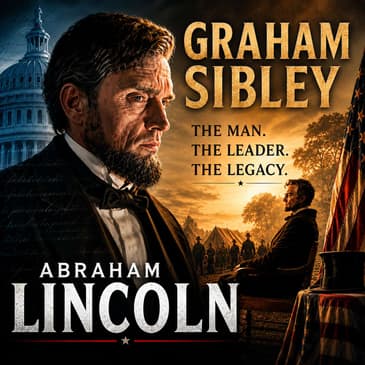
Graham Sibley
"Abraham Lincoln"
In this episode of Darektor's Cut, I sit down with Graham Sibley, the talented actor who portrays Abraham Lincoln in the Netflix documentary series Abraham Lincoln. We discuss his journey into the role, the challenges of bringing one of America's most iconic presidents to life, the research and preparation involved, and what it was like working on the acclaimed series.
Whether you're a history enthusiast, a fan of the series, or simply enjoy great conversations with talented performers, this is an interview you won't want to miss!
Be sure to like, comment, and subscribe to Darektor's Cut for more exclusive interviews with actors, directors, writers, and filmmakers from the worlds of film and television.
#abrahamlincoln #abrahamlincolnbiography #abrahamlincolnbestquotes #historychannel #americanhistory #civilwar #ulyssessgrant #johnwilkesbooth #truestory #interview #podcast #movie #shorts #historyfacts
Instagram: https://www.instagram.com/mondaymorningcritic/
Facebook: https://www.facebook.com/darektorscut
TikTok: https://www.tiktok.com/@mondaymorningcritic
darektorscut@gmail.com
darektorscut.com
[00:00:00] Our fathers brought forth on this continent a new nation, conceived in liberty and dedicated to the proposition that all men are created equal. Lincoln is very modest in almost every measurable way, but his childhood was hard. Here's this kid who yearns to rise beyond the frontier. The controversy over slavery had come to a collusion. The use of terror and violence had been the method of control.
[00:00:32] Lincoln made the decision that will define his presidency. If we let this stand, say goodbye to the union, democracy, all of it. A three-part series. The future of the nation really seems at stake. And the government of the people, by the people, for the people, shall not perish from the earth. Abraham Lincoln, a three-part series.
[00:01:02] Yeah, I've wanted to talk to you forever. And yeah, I'm so happy we were able to make it work. Yeah, yeah, me too. Me too. So I have some great questions for you that I think are decent. I have to say, though, I've had Malcolm Benville on the show before. Boy, does he know how to make a movie, huh? Oh my God. Yeah, I was just talking to Malcolm this morning. Yeah, he's really fantastic.
[00:01:25] I mean, he's such a master filmmaker and has such a clear vision and is so kind and gentle about the way that he shares that vision. You know, he's really amazing. Yeah, I loved Lincoln and the end of Lincoln brought me to tears and the end of Grant brought me to tears. Yeah. And his casting is impeccable. You as Lincoln and I think it's Justin as Grant. Yeah.
[00:01:52] Holy cow, just spot on choices that works so well. Yeah, the music he gets right. He gets the historians that are coming into comment right. There's not an aspect he ignores. I'll say that. I know. And he's done it so many times now and has done some really wonderful narrative films as well. But he's a really, I feel like he's always trying to like push the envelope on what a documentary can be. Yeah.
[00:02:18] And yeah, it was just a real pleasure working with him and I can't wait to do it again. I find it so ironic that the guy telling the best stories about American history is from the UK. I just think that's really funny. I know. Yeah. But he's a real, he's a real student. For sure. For sure. Yeah. And he is, he is so well versed in American history.
[00:02:41] And it's interesting to have a, especially in all of these sort of presidential, you know, biopics, you know, to have a outsider's perspective on it. You know, it's, it's interesting, you know, it's an interesting take on it. And he tells the story with no angle, no, like, he's not, you know, looking to promote any type of agenda. He's just telling the story, which is refreshing nowadays. Yeah.
[00:03:04] That was what we wanted to do with Lincoln is really show who he was as a man and, and, and how he was as a man and, and, and how that informed his decisions that he made as a leader. Yeah. Do you, so I know actors will say many times, you know, this is my process. Well, I feel like the process has to change for, in your case, in a role like this, because I mean, this is not just your everyday character.
[00:03:29] This is not, you know, I mean, this is somebody that's just so iconic, you know, it's like playing some ways, you know, it's like, I mean, not the same type of person, but iconic really. I mean, it was, it really, it really playing Lincoln changed the molecules in my being. Yeah. I mean, it really, it really, you know, at our first meeting, it was, we, we shot this right, right as COVID was, is kind of in the middle of COVID, you know?
[00:03:57] And, and, and Doris, we had this big zoom meeting and Doris and Malcolm and the whole team was there and, and Doris said, you know, Graham, your, your life is going to change by, by spending this time with Lincoln. And I thought, you know, okay, well, I thought being an actor or something, that's what she meant. Like, you know, it's going to open doors for me, but what she meant was that it was going to work. He was going to work on me in a way that would change me for the better.
[00:04:27] And, uh, I have had absolutely the case. And in terms of being an actor, my process was, he forced me into the most, um, committed process I have ever, uh, you know, um, it endured, you know, and it was a long, long process.
[00:04:46] And it was, it, he asked so much of me and, and, uh, and I was, I was freaked out. I was just absolutely freaked out, you know? And so fear really motivated the, the, the commitment, you know? Yeah. Yeah. When you're developing the character study of him, are you, are you focused on the man, the myth, the character? Like, what are you focused on most when you're, I mean, I guess it's all the above in some ways, but like, is there a particular thing that you wanted to get down?
[00:05:15] Right. That maybe you hadn't thought about before? Well, so much has been documented about him. Right. So, you know, um, there are, are, are many firsthand accounts. And so it's just finding the firsthand accounts that, um, resonate. I think, you know, I, I also had Daniel Day-Lewis on my shoulder. Yeah.
[00:05:36] And, and, and that was, um, that, that was, that was also a big motivator in, in, in, in how I found my process with him. You know, it was, uh, he was a big motivator because he was, he stayed in character the whole time.
[00:05:54] And, and, um, and I wanted to do that too. I felt like I needed to honor that experience for what Daniel went through in order for me to feel like I was going to take this character or take this man and, and, and do something different with it. Yeah.
[00:06:16] Do something that was, that was mine, inherently mine, you know, and that I knew I needed to, to, to treat that, to treat all of the facts. Daniel's research, which I went down the rabbit hole and discovered as much as I could, um, that he let me in on and interviews and, and articles and such.
[00:06:34] And, and, and, and, and then, you know, also the facts that of who Lincoln was, you know, and the immense amount of research that was in books and, you know, listening to historians speak about him. And then at some point, all of that had to become a subjective take. And I think Daniel's experience and my experience as people were, are different.
[00:07:04] And, and I grew up in, in, uh, I grew up in the Midwest. I grew up, I was born in Evanston, Illinois, and my mom was from Memphis, Tennessee. And we, we spent time driving that corridor right along where Lincoln in Illinois, right along where he was. And, and I, I, I felt like I had a personal experience that I could share to my take on Lincoln that was different than Daniel's, you know?
[00:07:32] And, um, and once I figured that out, that gave me a lot of confidence. That gave me a lot to, to sort of anchor into. Yeah. Because he was like wearing like the top hat to like the Outback restaurant. He was going to give speech. Like he was doing shit that was like, like he did not let it go. I heard a, I heard a story. I don't know if this is an old wise tale, but I heard a story that he had a flat tire. And he stayed in character as he was fixing the tire. I don't know if it's true or not.
[00:07:59] But, but I talked, but you, with him, with him, you never want to call a bluff because he's, he's that committed. He's that over the top into it, you know? Um, I, I tried to do that as well. You know, I tried to do that as well. And this was, um, you know, I, I did it in my own way. You know, I, I, I, I had to, I kept in an accent the whole time. I, I, I shuffled around like he did, you know, I, I really tried to anchor into that as much as possible, you know?
[00:08:28] And, um, I have to say that that commitment is so rewarding as a performer. And, and at the end of it, it's, it's just a, a release of, of knowing that, um, I gave everything I, I could to it, you know? Yeah. Yeah. You did an unbelievable job. Um, thanks. Yeah. Does it ever, um, I got thinking about this too, uh, Graham, how tough was life in the 1800s? I mean, we'll get into his life specifically a little bit, but I just feel like growing up in the 1800s that had to be hard as hell. Right.
[00:08:58] Oh, I mean, he was, yeah. Yeah. I mean, everything was, was hard, you know? I mean, there's the famous story of his father leaving and, and leaving him and his sister in the woods, you know, as, as he went out and found a new mother and a new step, a new wife. And, and, um. But that stepmom comes back to get him, to get him going with reading. Like that stepmom sparks his like love for reading. Right. And which sparks his love for Paul. So that, that stepmom is almost, it was, but yeah, but leaving, being left in the woods like that with your sister's insane. I mean, that's like crazy. I mean, it's crazy.
[00:09:28] And, and, you know, but, you know, that was an interesting, like that was the West. That was like, you know, the wild, wild West, you know, later, later in the, in, in the 1800s, you know? Um, this was the wild, wild West in a way too. Like that, that, that part of the, of Illinois was, uh, was on the fringe of the country, you know, it was on the edge of the country.
[00:09:51] So to have this sort of young man who, who, who teaches himself how to do everything, you know, and to come from that part of the, the sticks is, uh, it's just, his story is just unbelievable. You know, and it really is a Bible story. It really is like, uh, the story of Abraham. And he goes, and he's this guy, he frees the slaves and you know, it, it is a, and then he's, he's killed. And it really is a Bible story.
[00:10:16] You know, he's always, always, always putting others ahead of himself, which is biblical, which is a biblical story. I believe in most cases. Um, so, so let me ask you this because I feel like, so with Lincoln, there's so many things to love about him. And I think to this very day, the thing I admire most about him with all of his accomplishments is that with depression, he suffers the tragedy with his family as a child.
[00:10:38] Then as a grown adult, more tragedy, you know, all the while dealing with his depression, considering everything he did with the experiences he's been through and that depression. It's, it's nothing short of a miracle. And I hate to keep getting biblical here, but it's really like at this point, like the man is an amazing guy. Like he's an amazing, amazing guy. Amazing person. You know, I mean, some, some things really, you know, I'm asked often, you know, what, what, what have you learned from playing Lincoln?
[00:11:07] And, and, um, there, there, there are so many, you know, character traits that are, um, that, that he resonates with, you know? And one of them is one of them that, that, that continues that I'm continued to be reminded of is, is his patience. Honest, honesty, honesty, of course, honesty and his humor and integrity and justice and all of those things.
[00:11:34] But there's something really interesting about a leader having extreme patience and, and there's something that's really powerful in that. And, and, and it was, he was criticized for it, you know, immensely. Especially with McClellan. With McClellan. It was, yeah, it was, yeah. You know. But, but there's something so powerful in, in that as well. And, and, um, you know, last night, I, I don't know if you, are you watching the NBA finals? I am watching the NBA finals.
[00:12:01] I'm very, I'm, I'm, I'm from Massachusetts and I'm like, are you a New York guy? Yeah, you are a New York guy. I live in New York. Yeah. Yeah. So like, you know, the, the windows were open last night and you could hear the people just, it was just, it's, it's electric here. But, but, but this idea of resilience, this idea of patience, this idea of working through something that seems impossible, you know, is some, yeah.
[00:12:25] It's just something that continues to resonate for me, you know, um, after this experience playing Lincoln and watching the Knicks. Uh, yeah. Let me ask you this. Uh, if, and this is over the top, but like, if you could, what would you ask him? What's the one, not so much, what did you learn about him? But what's the one thing you'd love to ask him if you could, if that was even remotely possible? Do you love me? Yeah. Yeah. Yeah. I mean, really? Yeah. Like, I mean, I, I love him.
[00:12:55] Yeah. I really love him and he's a part of my life, you know, and he's still with me every day. Yeah. And, and, um, I see him, I'm, I'm reminded of him all the time. Yeah. And, um, and I would want to know if, if he loved me. Yeah. Because I love him so much and, and he, and he has had such a profound effect on my life. Yeah. And, uh, and, um, I don't know. It's maybe it's a silly question, but that's what I would want to know.
[00:13:24] I'd want him to kind of just like, be like, I got you kid. You know, like I, I, you know, I, I, I, I would want him to be the hero that I've created. Yeah. Yeah. That's such a great answer. And, you know, and the reason I asked that is because he's just, uh, he's the kind of guy that would have been so appreciative if we could somehow mix timelines. And he was, he had a chance to take a look at what you did and what Daniel Day-Lewis has done. It's just, uh, he would have been appreciative of that. So yeah. I, I, for sure.
[00:13:52] I, I, I, I think he probably would have been, he probably would have made some really great jokes about it too. Yes. Yes. You know, and you're, you're the first, you're the first actor in a long time that I've interviewed who really is open about how, um, uh, a role changed their life. Because I always ask the question in one way or another, you know, is there a role that left you that stuck with you long after the part was over? And I always hear like, nah, I'm on to the next project or no, but it's like so refreshing
[00:14:22] to hear you be so honest and so just straightforward because I'm, I'm just, I'm, I'm like, as somebody who's not an actor, I'd be like, my God, I feel like, of course there has to be roles that stick with you long after the project. And look, I mean, my relationship with him has, is gone up and down, you know what I mean? I mean, I, I, I, because of it's, it's, uh, it's a turbulent relationship.
[00:14:47] I mean, I've been super angry at this, at this, uh, at him and this experience and the, and the, and the expectations and the, the, you know, all of the things that go along with, with, with giving yourself to something, you know? Um, you know, I, I, I recently drove across the country. We moved from, from LA to, to New York, um, just this past in January and, and I made a
[00:15:14] stop in Springfield and, uh, I didn't know why I, I guess I was just feeling really, I was feeling really discouraged. You know, I think as an actor, this, this journey is very turbulent and we have two kids and, and the business is changing and, and, and, and I got sort of, I got angry at
[00:15:42] this, at this experience being so having so much expectation on it. And, and, um, and, and I stopped in Springfield and I didn't really know why I just was like, I'll just stop and see, I'll go and see his house and, and whatever. And, and I, I put together that why I, the universe had stopped me there in Springfield was in a way to kind of say goodbye to him. And I cried the entire time I was there through the museums.
[00:16:13] I was the only person in the state house and I went up, I went up, I went up on top of the, the state house and, and I just sat there and there was no one in the building. There was no one there. And I just started screaming at him and I was like, why did you have me do this? And why did you, you know, and in a way it was really cathartic to kind of like have all of this stuff that as an actor you hold onto and you, and you, you, it's just, it,
[00:16:41] it gets in the fiber of you and, and to, to be able to, you know, years later, you know, let it really in a healthy way, let it go. Really let it go. Right, right. I mean, he, he is still constantly with me and obviously, and, and he's in, on every street corner and every car you're standing in front of and every middle school and whatever. I'm constantly reminded of it, but in a way I was able to let that experience go in a,
[00:17:10] a healthy way and really just take the, the amazing parts of it and, and, and, and honor that. Yeah. That's such a great answer. Um, how did they, how did you, was it a long process getting the role? Was it, was it, did you, I mean, you must've been beside yourself when you found out you got it. I mean, it was, I was, well, the, the story is that I was cast in another project about the Lincoln Douglas debates and, um, I had started.
[00:17:41] So I was, the full story is, um, COVID happened and, uh, we were living in Silver Lake, uh, in LA and we have twin boys and we landed, we were in Silver Lake for way too long. And my mother-in-law in San Diego said, why don't you come down for a weekend? We went down for a weekend and, uh, realized, wow, this is much better. There's an outdoors.
[00:18:10] We were living in a townhouse and it was tough to be there. And, and, um, and we land in San Diego on the day that George Floyd was, was, killed. And I'm watching the CNN newscast of it. And my friend Justin calls me and he says, Hey, so I'm making a movie about Abraham Lincoln. You want to play Abraham Lincoln? And I was like, we're going to, it's about the Lincoln Douglas debates.
[00:18:39] And I was like, no, I'm good. I'm not going to do it. No, no way. Daniel Day Lewis did that perfectly. No, thank you. No, thank you. And, um, you know, I, I, I thought about it and then I said, you know, it was COVID and there's nothing going on. I was like, okay, sure. And, and, and the ripple from George Floyd's death was massive. And I couldn't go to any of the protests.
[00:19:08] I couldn't go to do any of that stuff and be a part of that experience, um, with my friends and support my friends. And, and, um, and so my way of doing that was studying Abraham Lincoln because I had this little project to do. And so I had about six months of, that was May and we were going to shoot in, I guess it was four or five months. I guess we were going to shoot the end of August and beginning of August rolls around and they
[00:19:35] can't work it out because of COVID, it was going to be too expensive and SAG was going to be an issue and all of these things. And, and so I, they had to, they said, we can't do this with you, Graham. And, um, I was so heartbroken. I had done, I had, I had worked on the house divided speech. I had, I was pushing my kids strollers, like playing Abraham Lincoln in the, in the, in the suburbs, you know, just like I was, I was, I was in it.
[00:20:04] I was like every day I was testing myself. I was studying Daniel Day Lewis. I was studying, you know, uh, the, um, Tony Kushner script. You know, I was, I was really going through that process of building him. And then my friend called and said, we can't do this movie. And, uh, I would stay up in the middle of the night and I would read these, these books. I would read all these, I went to the library and got just stacks and stacks of Lincoln books and, and, uh, I would stay up in the middle of the night and read them.
[00:20:34] And, and I, I enjoyed that. I would get up in the middle of the night when it was quiet and, and I would read the Lincoln books. And, and I didn't stop that after, after the film didn't happen. And, and then about that, that was, uh, September, October, November, December. I was still kind of in this Lincoln thing. I was still watching documentaries and reading books and, you know, I was still in this world.
[00:20:59] And, and, uh, and then I got a call from my, my manager that Leray Mayfield was casting, uh, uh, it was a secret project at that time. And I didn't, and she said, it was a European director. It would be shooting Europe. Would you be interested in doing it? I was like, yes. And, um, and, uh, then I had to sign an NDA and then my, the, the pages came through
[00:21:26] and I looked at the NDA and it was to play Abraham Lincoln in the, in the untitled Lincoln project. And, and I, I just started crying. I said, Marilyn, this is my wife, Marilyn. And I said, I can't believe this. They gave me a week to do the self tape and I had it in by 3 PM that same day. Wow. I had already done all of it. Wow. I was like, this is mine. Yes. And, um, and then there was a series of tests and zooms and, and, and, and more auditions.
[00:21:56] I think there was like two or three different auditions that I had to go through with, you know, it was, it was like a test. And then, um, and then we, and then I finally got the call that it was mine and, and, uh, I know they were looking at a lot of people. So I was, I was very, very grateful. Yeah. Yeah. Well, they got the casting down perfect, Graham. So I'm, I'm really happy. Yeah. So, you know, I, I also, I also have to say that the one thing we haven't learned from though, it's like four presidents have been killed, you know, um, uh, Martin Luther King,
[00:22:26] RFK. Right. I mean, even our current, a current president, like I'm not saying you have to agree with pundits. You don't, it's not about politics, but the idea that if you don't agree with somebody, you just want, you just kill them. We just, just kill them. So I just, I, I, we haven't learned anything from this iconic, sweet, wonderful, I just character of a man. And we haven't learned anything from it. And it was like, it's just so tribal. I mean, you even see the Spurs fan who gets beaten in the streets here. It's crazy. If you don't agree, you don't like something, just beat somebody up. That's the way to do it. Kill them.
[00:22:56] That's just, that's crazy. You know, I don't know. I just, I know. I agree. I know it's, it's, uh, I, I hope one day that we find, I don't know. It's just, uh, it's a sad, it's a sad, it's a sad thing that humanity, uh, can't see the, the best in each other, even when we disagree. Yeah. And you think that would have changed and it really, it really hasn't.
[00:23:24] Um, uh, do you think Lincoln was great because of his convictions? Um, or because he was willing to alter those convictions, change them at times. Both. Yeah. Yeah. Yeah. Yeah. Yeah. Because I mean, he, he adapted, I mean, he'll go down, he'll go, he'll go down as somebody that will talk about, you know, oh, he freed the slaves. He did all that stuff, but he did so much more. He's such a complete package of a, of a human being. And I wish, I hope people realize that kids realize that as, as he gets older.
[00:23:54] Yeah. I mean, he had to change, he had to change to do the right thing. You know? Yeah. Uh, you mentioned the books, you mentioned the books and things like that. How deep did you get into his life? I know you said the books, you said, did you go into like, um, letters and. Oh yeah. Yeah. Yeah. I did. I did whatever I could possibly get my hands on. And, and, and, and because I was playing him throughout his entire life, you know, from I picked him up in the story from about age 20 and 19 or something.
[00:24:24] And then 21, 21, I can't remember 21 maybe. And then all the way through till he was 56. And so I had, I had, you know, so much of his life has, has been documented. And so, you know, there were firsthand accounts that basically blocked, helped block scenes. You know, he was standing by this window when he, when this happened, or, you know, this is the way he signed this piece of paper, or this is what happened when he fought Jack Armstrong or, you know, whatever.
[00:24:54] Um, but like, uh, you know, I, I, I had as much of the research as I could possibly get on my own with, you know, the internet and libraries and whatever. And then when Doris and, and Beth Lasky, her producing partner, uh, when I was finally cast, they said, you know, text us and email us with any questions you have.
[00:25:19] And they would, they went through their treasure trove of, of research years and years. I mean, just the, everything you can think of. And I would have a very specific question and they would full, they would pull news articles about this one day, you know, or moment or whatever. And I would, I was asking very specific questions because everything textured it, you know, everything textured, like, you know, I would be in the middle of a, of breaking down a scene or something
[00:25:45] and go, you know, I would need to know, I, I, I'm not, it was years ago. So I, very specific things that, that happened previous to this meeting with this general at this time. And, you know, would, you know, where was I coming from and what would my moment before be? And who had I just talked to? And, you know, all of that, all of that stuff. And a lot of it is documented, you know? Yeah. And more so a great Instagram, but more so not the letters and all the stuff you're talking
[00:26:14] about, the pictures I feel like are even more, they speak bigger volumes about what kind of man, I mean, sitting at the camps with Grant or whomever, and just sitting in a chair, just talking to them. Nobody's doing that today. Yeah. Yeah. Yeah. You don't see, you don't see anybody. And there's no, there's no, there's no guards or I just kind of like him going into the battlefield, which was almost unheard of at the time. Right. So, I mean, he was, he was truly a man of the people, even though a lot of people like to say that today, he really was. Lincoln showed up.
[00:26:40] I think it was Fort Stevens where he showed up and was, went on, went on the actual battlefield and, and, and was shot at, you know, he stood up on the stoop and was actually, it actually shot at. And I think he's the first president, the only president, I think to, to have shown up on a battlefield like that. Yeah. Yeah. Which, which is insane. You know, there's, there's a part of this documentary that hits me so hard. I forget her name and I'm, I'm so embarrassed that, that I did.
[00:27:05] She's a historian and she made the point, and I never thought of this my entire life, Graham, that Lincoln had between the end of the civil war to when he was shot five days to enjoy his life. And then they should, they show you getting, you know, and it was like, Oh my God, I never thought of it that way. I never put that in perspective. And then you're doing an awesome job you're doing. And it's like, I don't know. I just, there's a few times I've been hit in the head with a documentary and been so emotional. One was with Grant, you know, when he did talk about Twain and how he had, he just finished
[00:27:35] the book and there's a Lewis and Clark moment with, um, with, with, with Burns and when they died, it's just, there's so, but this was the part that really hit me hard, Graham. I don't know if you remember what I'm talking about, but it's towards me. I do. I know. Yeah, I do. Because, you know, to, to, to, to think that this story could have, could have been different. He didn't have to go. Yeah. Yeah. He didn't have to go see that play. Yeah. Um, but you know, one of the things that we discovered or one of the things that I, I
[00:28:04] discovered with, with, with Larry Moss is that he's an amazing acting coach and mentor and, and friend. And, and he, um, and I unpacked some of this stuff together and, and we, we discovered that, um, I think he had attended, I'm going to get this number wrong, but I think it's something like in his, in his years as president, something like 400 times he went to the theater.
[00:28:33] Is that right? Does that be right? Well, that many, whatever it was. Yeah. Yeah. Whatever it was. Yeah. It's whatever it was, like it's 400 times, right? That is a lot of times to go to the theater. And so what, over his, over his years as, as president, what, what was it that he was doing there? And, and I, I think he was, you know, he was escaping. Yeah.
[00:29:04] You know, he needed an escape. He didn't drink, you know, he didn't, he, he wasn't, not that that's the only escape you could have, but he didn't, he didn't do that. You know, he, he, he, he, he went to the theater and I think that was a way for him to decompress. And, and so, you know, I don't know. Yeah. What would our country be like if he. Yeah. Yeah. See that play. To that point, you and Jenny who plays Mary, Mary Todd, who's unbelievable job.
[00:29:32] Like they have this great conversation. Yeah. They have this great conversation where it's like, you don't have to go or, you know, you don't, and it's like, he is the biggest Graham. I can't think of another guy that fits us more. He's the biggest. What if in the history of, of our nation, he's the biggest one. Like if he doesn't go, like, how does that change life moving forward? I guess you could do that with anybody, but especially him. Yeah. I mean, what if, what if, what would have happened? How would reconstruction have looked?
[00:30:01] And that'd be an interesting question to ask AI. You know, like. Yeah. Yeah. Yeah. Yeah. How would that have affected our trajectory as a country? Yeah. If Lincoln was, it lived until what? He was 56 and 65. So if he would have lived another 30 years or so until he was 80. Yeah. Six. He would have, he would have almost, he would have been just short of what? 1900.
[00:30:31] He would have been like five or six years short of 1900. He would have been. Yeah. It would have been. Yeah. 30 years would have been 80. Yeah. 90. Well, we would have definitely heard his voice. Yeah. Yeah. We would have heard his voice. Yeah. Yeah. Yeah. And, uh, anyway, and I'm among many, a myriad of other things. Yeah. Yeah. Uh, a few more questions and thank you for all this time. Uh, one of which is how, how weird was it to look at yourself in the mirror after you're, you're like, is it, is it a WTF moment?
[00:31:01] Uh, Graham, you're like, I cannot believe how much. Oh yeah. Because before I want people, if they're watching or listening to this to go to your website, right? It's your name.com. Right. I'm pretty sure. Yeah. Right. Uh, you're the shot you use for your bio. It's like, I see why they got this guy playing Lincoln. Like I see it. Yeah. Well, thanks. Go ahead. What were you going to say? I'm sorry. No, I, I, it's always, you know, taking on, it's so funny because I, I don't necessarily, I still kind of see myself.
[00:31:30] So, I mean, I, I see myself wearing a beard and then I, I, I try really hard to pretend that, you know, I really just try to commit as deep as I can to my experience with all the information that I, that I have, but it, you know, yeah, it, it, it is weird. It is very, it is very weird. And it's, and it's, um, yeah, it's just, it was just an amazing experience.
[00:31:57] It's just, it's been the most rewarding, amazing experience of my, of my career for sure. Yeah. What's, what's around the corner for you for other projects? Have you, whatever you wanted to say. Yeah, I just got done. I just got shooting a film in, uh, in Budapest called Ashes to Iron. Uh, and I'm playing a Hungarian AVH officer, which was, it's about a young family that's, um, fleeing the Hungarian revolution in 1956. Right.
[00:32:27] And, uh, and, uh, the family is, is, is making their way to Austria and, uh, I'm tasked. I play the villain and, uh, I'm tasked with finding the, the family, uh, and bringing them back to my Soviet, uh, superior. Um, so, um, yeah, I was just in Budapest for, uh, just got back about a week ago or so. I was shooting over there for a month with, uh, with Danny A and Katie Cassidy and Jeremy
[00:32:52] Luke and, uh, and Barry Markowitz and just an amazing team of people. I'm so grateful to be in the movie. It's going to be great. Yeah, for sure. Uh, it's frustrating though. You have your, you got a young, you got a family and then you got your career. It's hard. It's hard to manage. I mean, I, I have a job outside of this and it's hard with two kids, man. It's hard. Yeah, it is. It is. It is. It is. It is hard. And when you're dependent on a business that's so turbulent, you know, it's. Yes. That's, that's a, that's a tough storm to, to endure sometimes. Graham, I feel for you, man.
[00:33:22] I get it. I get it, you know? Yeah. Yeah. Thanks. Uh, last, last question. Uh, give me a couple of movies that changed your life. Pulp Fiction. When I was 17 years old, walking into that theater and I was, my friend Greg Dietrich and I sat down in the fourth row and it was the only, the only two seats that were left. And I just feel like that movie was like, oh my God, I will never forget that. Um, Hoosiers. Hoosiers.
[00:33:53] Um, Hoosiers changed my life. Good one. Yeah. Um, uh, I think E.T. probably changed my life. Yeah. In some way, the, the, the, the, the, uh, ability to be, I think when that movie came out, it was something that sparked my imagination and, and, and watching Henry Thomas be this little kid.
[00:34:20] I was probably at the same age and just riding my bikes around and pretending like it, like allowed me to pretend in another world or something. Um, yeah, those are, those are, I mean, there's many others. His, his audition tape, his, his, if you ever, if you haven't seen it, his audition tape is incredible. Uh, yeah. Yeah. Uh, Graham, you rock. And I hope you come back someday, man. You're, you're a terrific actor and you really hammered this home and not easy, not easy to play an icon. And you, you did it with flying colors, man. You do great. So thank you so much, Derek.
[00:34:49] I really appreciate you reaching out and great questions. Yeah. Have a great afternoon. Thank you. Thanks, man. Talk to you soon.